Talk · Nov 2026 · Valencia
Rapid prototyping, validation and security
Anyone can ship now, PMs included. That's great for your capacity as a designer, as long as you hand them the right skills and set up the right guardrails. These are the slides, the orchestrator skill and the pre-ship prompt from the talk.
The bar moved
Product managers are vibe coding their own ideas, and the scope of what's expected from a designer keeps growing. Speed is being demanded more than ever.
At the same time, a working app isn't special anymore. When anyone can ship, quality is your moat: accessibility, copy, polish and safety.
Knowing what to build is the hard part. Anyone can build and ship, so a lot of code today is wasted. As a designer, step up your product thinking and critical thinking instead of waiting to be told.
What goes wrong
Models finish the happy path. They write code that works when everything goes right, and nobody asks who else can read that table or where the key lives.
Veracode tested 100+ models on 80 coding tasks and found a security flaw in 45% of them. Moltbook exposed 1.5 million API tokens because Row Level Security wasn't set up. GitGuardian found Claude Code-assisted commits leak secrets at 3.2%, against a 1.5% baseline.
Unlock your capacity
If you're swamped and a PM has an idea, let them build it. Give them your design system, not a blank canvas: components, tokens and your tone of voice.
Then add skills. A design orchestrator reads the PRD and the diff and decides which specialist runs: content design, UX research, brand and design system, or QA. The more context you feed in (Granola meeting notes, Notion PRDs), the better the result.
Iterate fast, without the slop
Claude makes it cheap to try things. You can build three versions of an idea before lunch, put them in front of people and bin the two that don't work. That's the real win: more attempts, faster feedback, and less time defending the first idea you had.
The catch is that the first version Claude gives you looks like everyone else's. People can spot a vibe-coded site in seconds now, and once they do, they trust it less. So iterate on the look as much as the logic.
These are the patterns I see most, and what I do instead:
- The purple-to-blue gradientTake colours from your brand or a reference you love, and use them to mean something.
- Inter on everythingIt's a good font, but it's the default. Try Instrument Sans, Geist or Hanken Grotesk, or a serif for headings.
- A centred hero with three icon cardsLead with the real thing, like a screenshot, a demo or a number, and lay the page out around your content.
- Sparkle emoji as iconsPick one icon set and stick to it, or use none. A sparkle next to the word AI is the biggest giveaway of all.
- Glassy cards and huge shadowsChoose one corner radius and one shadow, and use them everywhere.
- Copy like "Supercharge your workflow"Say what it does and who it helps, in plain words. Write it yourself, or give Claude your tone of voice guide.
- Made-up stats and testimonialsUse real numbers or leave them out. People can tell.
- Every section the same width and rhythmMix it up with a full-width image, a tight list or a big quote.
Build your own
It's never been cheaper to build, but some of my products still missed the market. Car people on Reddit called AutoScout "trash, slop": eight features, none past 80% reliable. Sahara Studio, my AI voice tutor, had 193 visitors on PostHog since mid-October, and 5 of them started a voice session.
I'm not discouraged. Building them taught me auth and Google sign-in, voice models, email marketing funnels and scraping. If your company isn't adopting this way of working, start your own side projects, because people are running loops around you.
Interviews now ask about your AI build process, and next year a portfolio without an AI case study will look outdated. If you're junior, not being latched on to the old ways is exactly what a lot of companies want.
Prompts to copy
Press Copy, paste it into Claude Code, then adjust it for your team. The grey comments explain each line and are not copied.
The orchestrator skill
This is the short version. The full skill, with four specialist guides and a token checker, is in the download below: unzip it into .claude/skills/ and swap in your own tone of voice and design system.
---name: design-orchestratordescription: Design quality gate for any change a person can see. Routes the work to the right design checks.---1. Read the brief, the PRD and the meeting notes.2. Read the diff and decide which specialists to run.3. Copy changed? Run content-design.4. UI changed? Run design-system and check_tokens.py.5. New flow? Run ux-research.6. Run QA: tests, before and after screenshots, no secrets.7. Report what failed, and what you couldn't check. Don't fix it silently.The pre-ship prompt
Paste it before you open a PR, or hand it to a PM on day one.
Before you open the PR:1. Run the design-orchestrator skill on this diff.2. Check every new database table has Row Level Security turned on.3. Scan for secrets and hardcoded keys.4. Run the Playwright tests and attach before and after screenshots.5. List anything you couldn't check.Set this up on Monday
- Connect your design system to ClaudeFigma's MCP server lets Claude read your variables and components. Only connect servers you trust and keep their scopes small.
- Write a tone of voice fileIt becomes your content check, so the copy sounds like your product.
- Add an orchestrator skillRun it before every PR, whoever wrote the code.
- Turn on secret scanningA pre-commit scan with Gitleaks, and check every table has access rules.
- Give PMs a sandbox, not mainPrototype on a preview link, review it together, then hand the prototype to engineers as the spec.
Don't use AI as a replacement for your judgement. Use it for inspiration and help, and keep the last 10% for yourself, because that's the job.
Further reading
- The slides as a PDFWorks offline
- The design-orchestrator skillDownload the full skill: orchestrator, four specialists and a token checker
- Monzo's tone of voice guideThe public guide the content-design check is adapted from
- The talk boardAdd a sticky with one thing you will try
- Veracode GenAI Code Security Report100+ models tested on 80 coding tasks
- Hacking MoltbookWiz's write-up of the exposed database
- The State of Secrets Sprawl 2026GitGuardian on leaked secrets and AI-assisted commits
- The full deckOpen the slides on their own
More talks and workshops
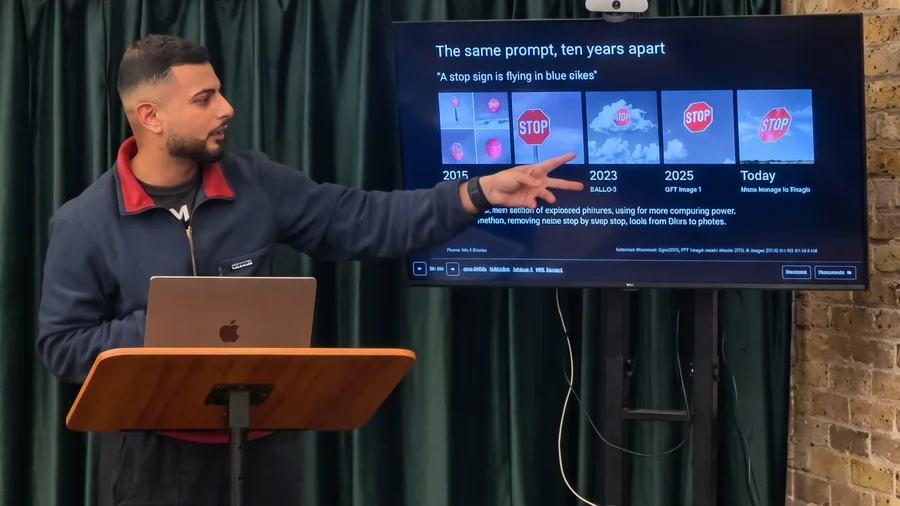 Workshop · Nov 2026 · Hulm ClubPrompt like a director
 Workshop · Sep 2026 · Hulm ClubBetter results from Claude and Codex with Plan Mode
 Talk · Jun 2026 · AI Tinkerers DohaLessons from vibe coding TrainTimesUK
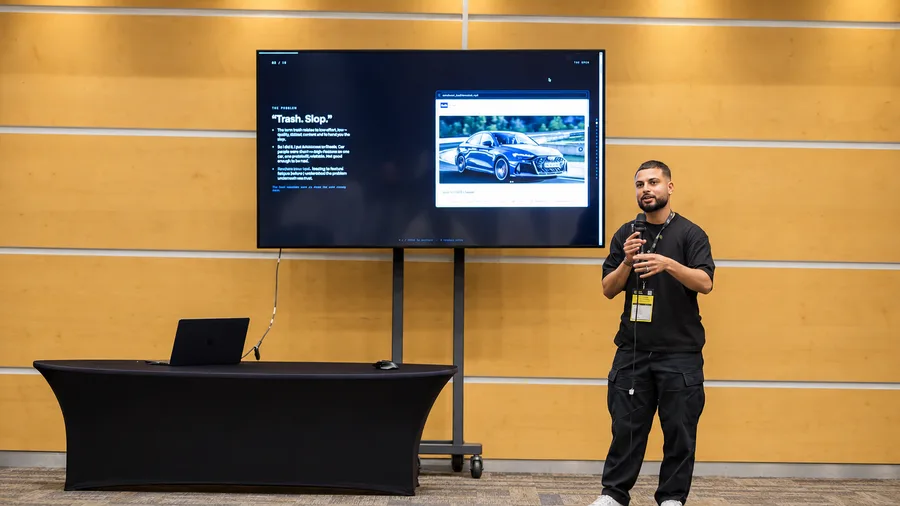 Keynote · Jun 2026 · Muslim Tech FestIntentional design and AI prototyping
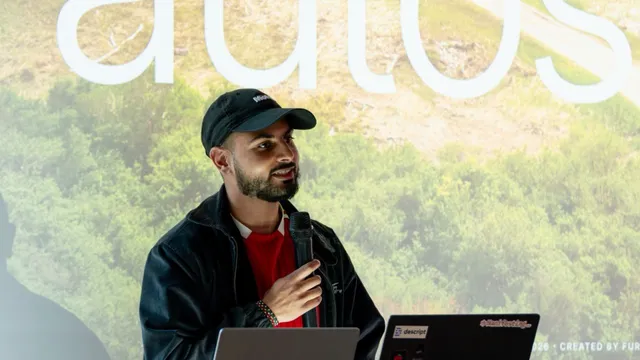 Demo · May 2026 · Deen Developers' Vibe + TellAutoScout, live
Hopefully this helps you out! Feel free to reach out, or see all my talks and events.