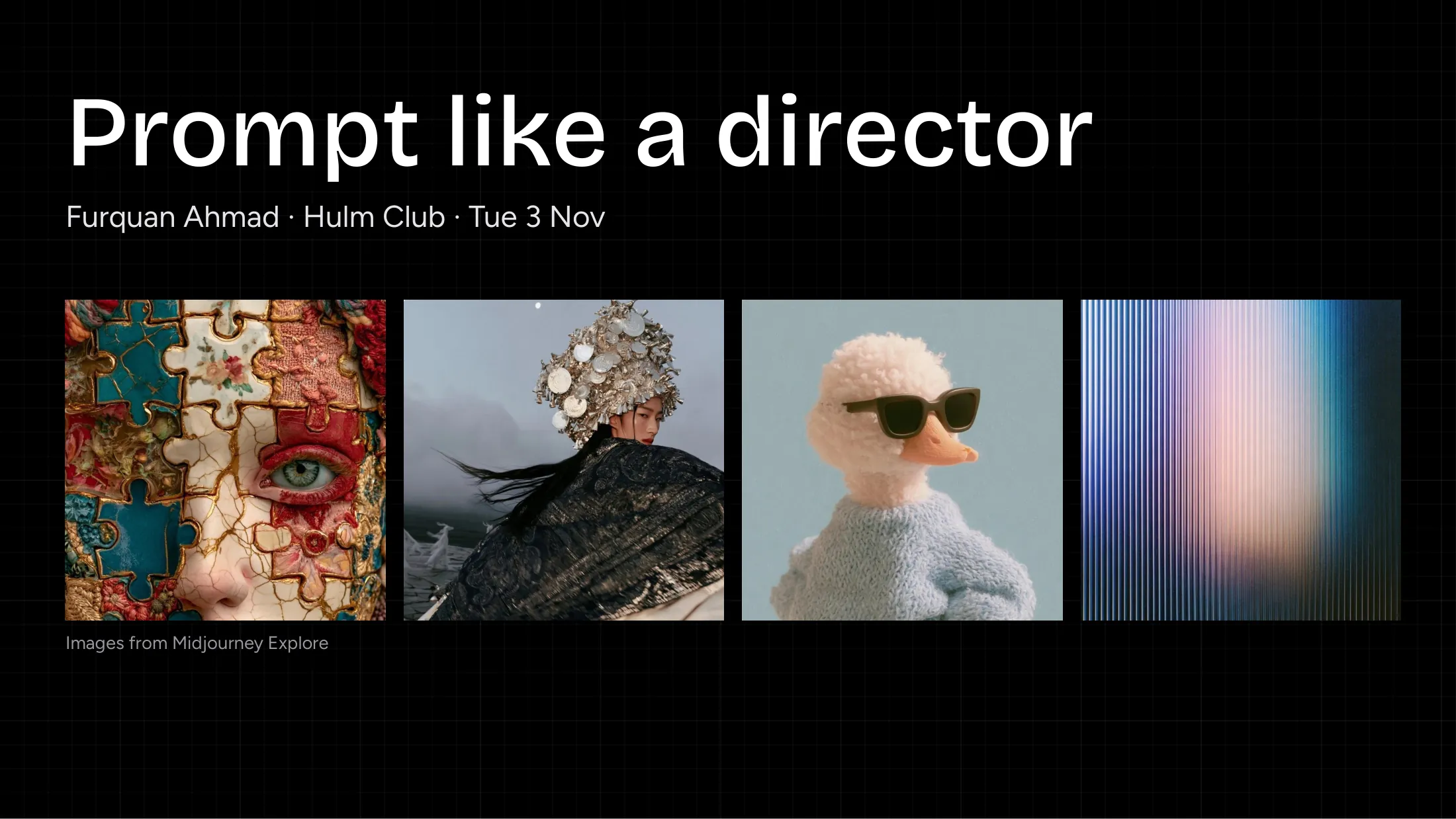
Everything from my image and video workshop at Hulm Club, so you can keep making things. Press Copy, paste it into your tool, then fill in the [brackets].
One detail at a time:
1 / 88
Drag slides into any order, or use the arrows. Click a slide to go to it. Your order is saved in this browser only.
Workshop board
Paste your images, add stickies and see what everyone made. Everything you post is public.
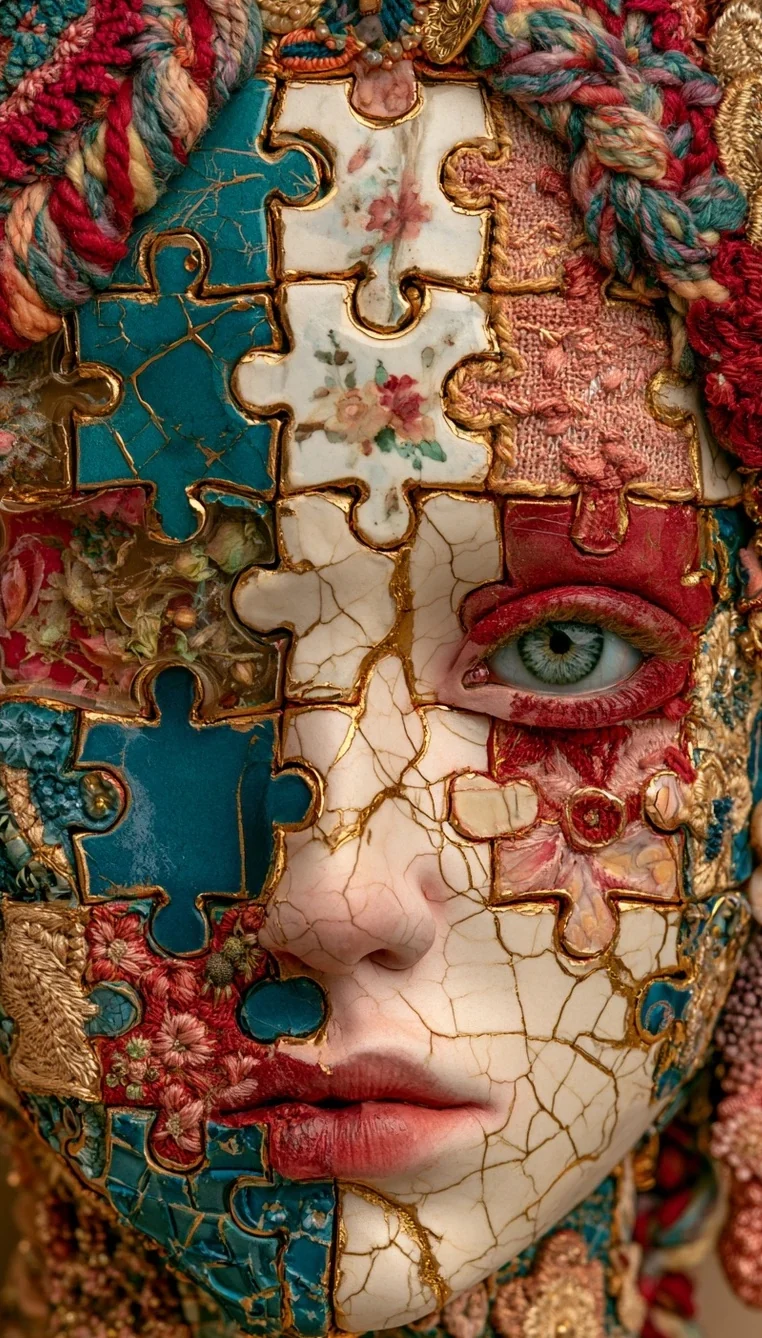
Midjourney communityNames every materialSee the prompt
A giant 3D jigsaw puzzle portrait of a mysterious woman, assembled entirely from individual physical puzzle pieces each piece a separate solid object made from a distinct material. Some pieces are knitted from thick colorful yarn with visible loops. Others are glazed porcelain with gold kintsugi cracks, densely embroidered fabric with raised threads, miniature watercolor paintings on paper shaped pieces, transparent resin containing suspended flowers and tiny objects, or intricate ceramic mosaic tiles. All pieces fit edge to edge with clearly visible jigsaw silhouettes, rounded tabs, and recessed sockets. The materials form the actual physical thickness and structure not painted puzzle lines. Rich colors: deep turquoise, crimson, ivory, antique gold, cobalt blue, dusty rose. Surreal, uncanny, beautiful mixed media craftsmanship. Extreme material contrast, intricate detail, sculptural depth, dramatic lighting.
Fashion editorial
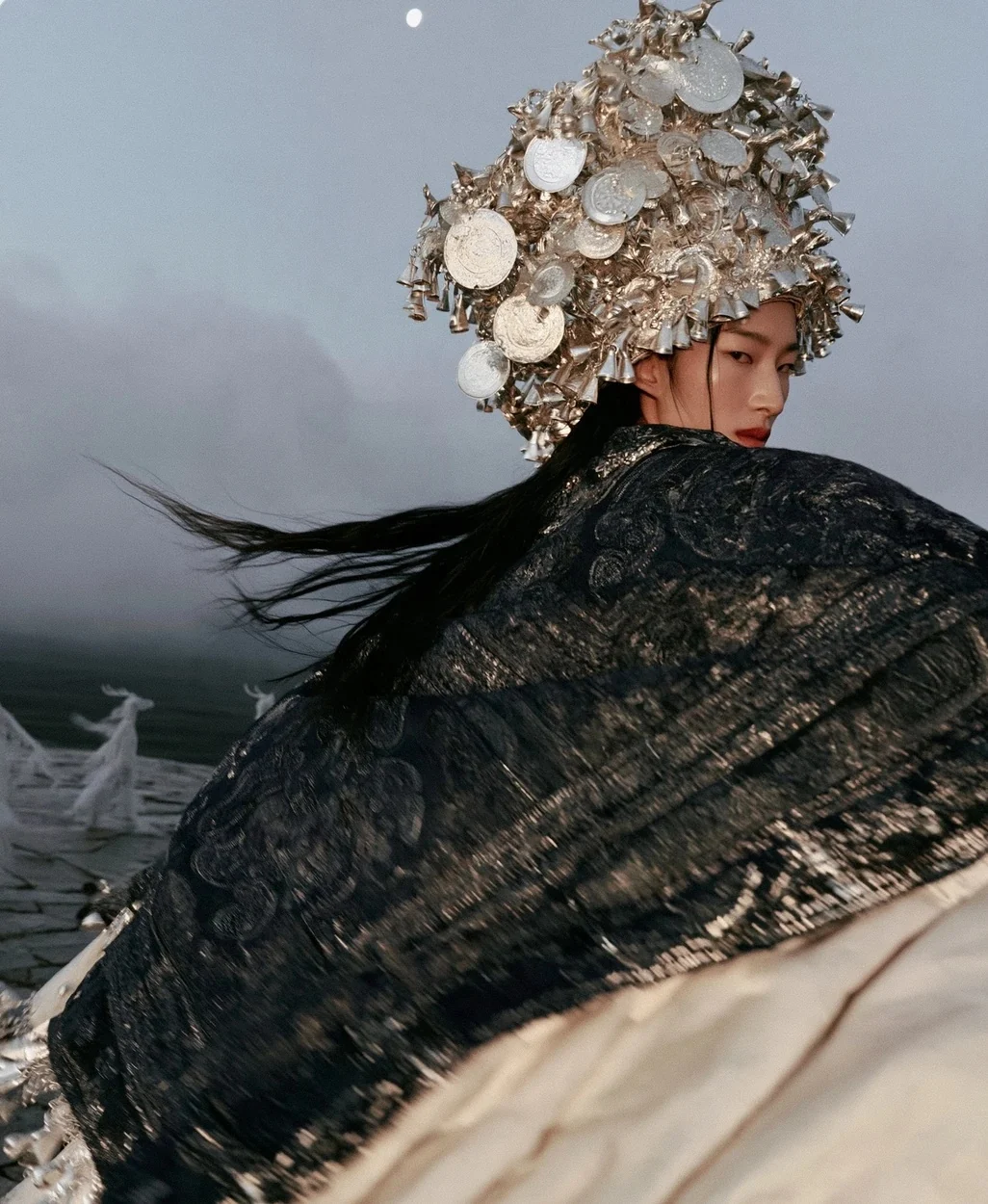
Midjourney communityCostume, place, palette, ratioSee the prompt
Surreal dreamlike fashion editorial, a model in a traditional Miao festival costume with an elaborate crown of silver ornaments and layers of embroidered indigo fabric, silver bells and discs shimmering, standing on a moonlit mountain terrace, misty valleys and faint spectral dancers in the distance, silver and deep blue palette, luminous ancestral aura, haute couture cover, 3:4
Lenticular poster
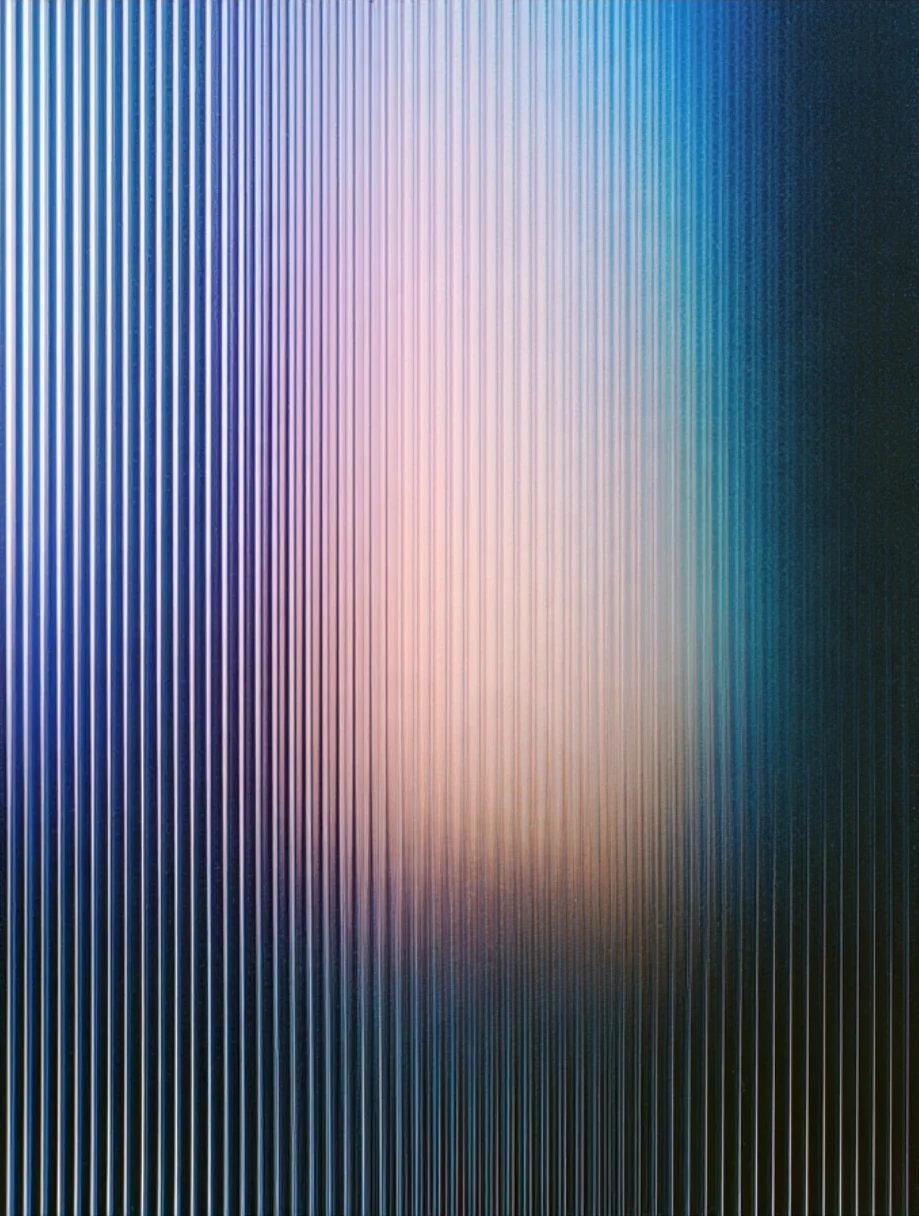
Midjourney communityJust surface, light and textureSee the prompt
Minimal abstract lenticular gradient poster, vertical ribbed acrylic surface, dense parallel optical stripes, gradient distorted through cylindrical lens texture, soft vertical smearing, subtle louvered refraction, shallow glossy highlights on each rib, pastel color diffusion, fine grain texture, flat poster composition
Kiwi espresso machine
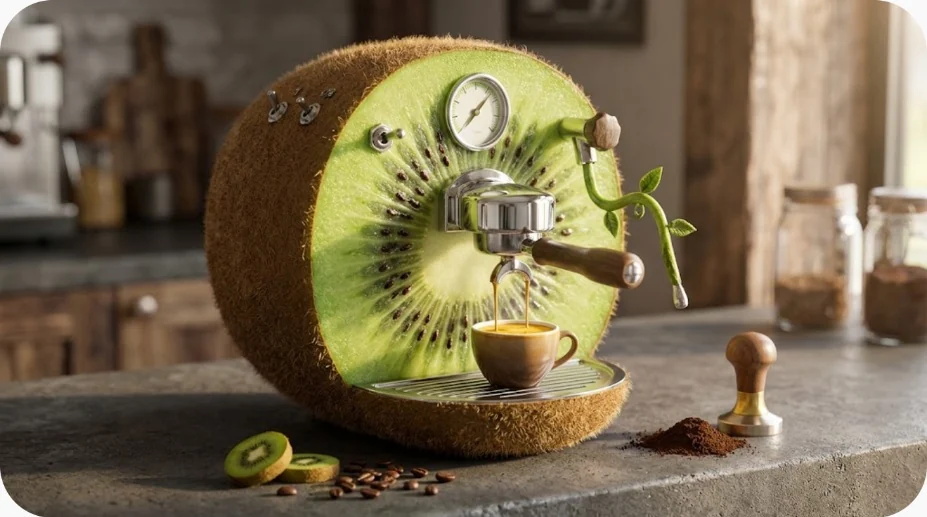
Made in GeminiOne ordinary thing, made impossibleSee the prompt
A high-end espresso machine housed in a halved kiwi, fuzzy brown rind exterior with a polished chrome group head, vivid green interior with a radiating seed pattern forming the pressure gauge dial, steam wand shaped like a curled vine, a single ceramic cup catching a glossy crema pour, on a concrete café counter with fresh kiwi slices and a brass tamper, warm morning side-light, product photography aesthetic, 50mm lens, f/4.
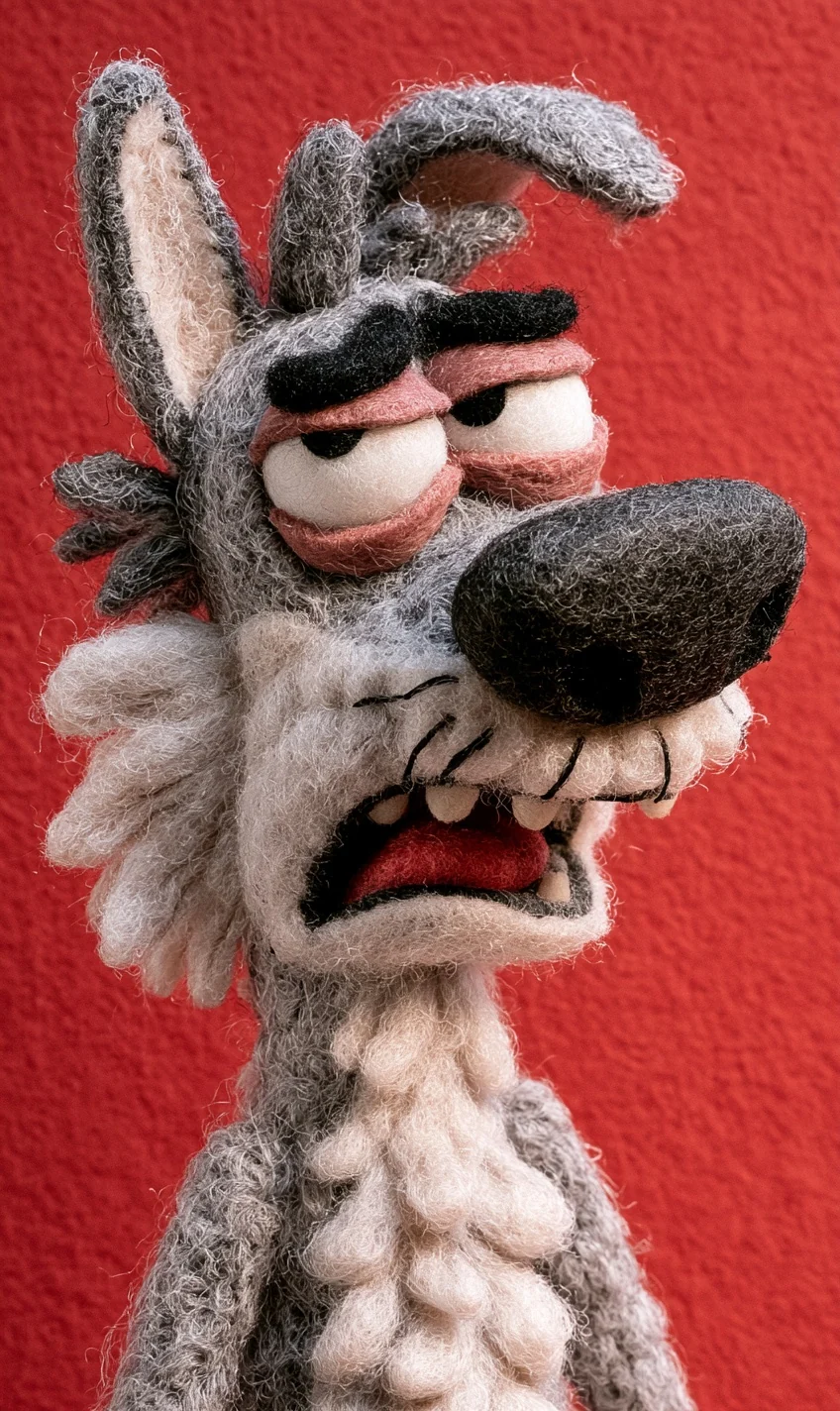
Felt wolf
cats666000 on MidjourneyCharacter, then materialsSee the prompt
A cute, silly Pixar-style cartoon wolf with big googly eyes, shiny body, heavy eyelids, slack features, visible fatigue, close-up shot on a red background, head looking at the camera in a 3/4 side view, Pixar and children's book illustration style, wool felt fabric art, Mo Willems style.
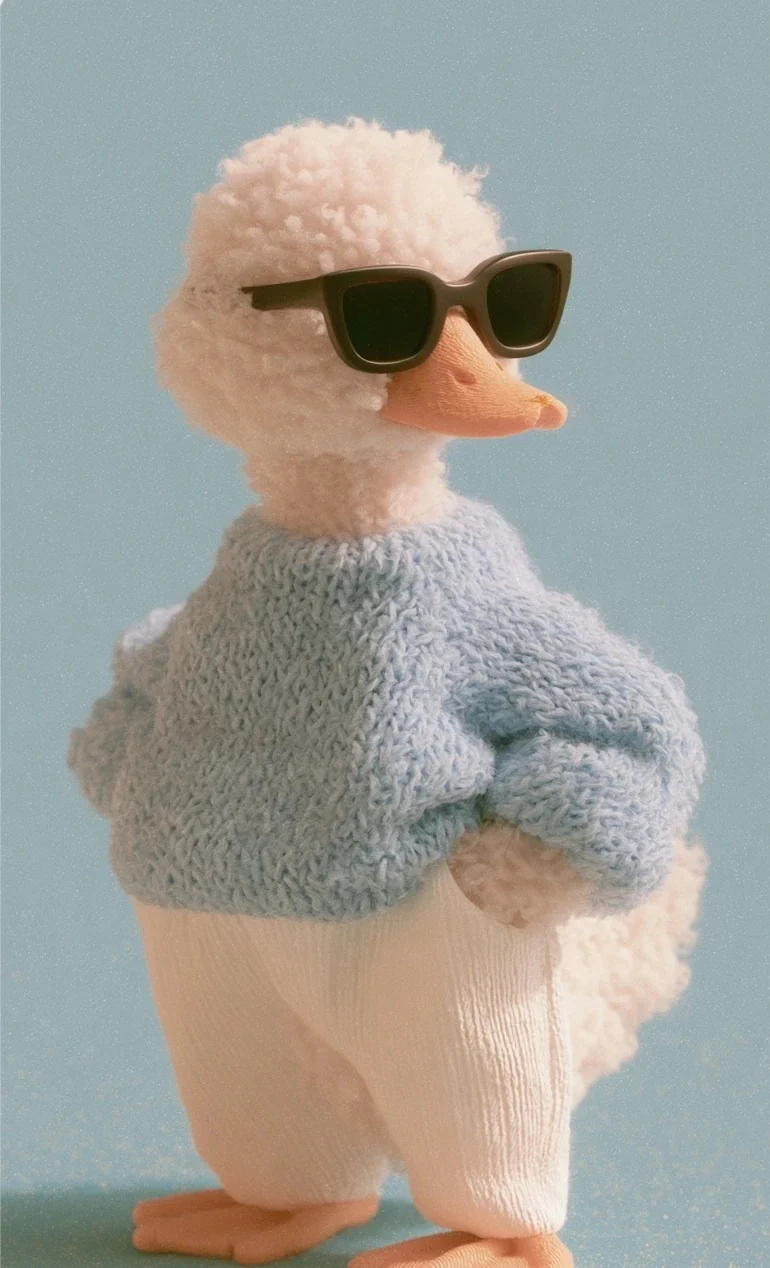
Duck in a jumper
Midjourney community
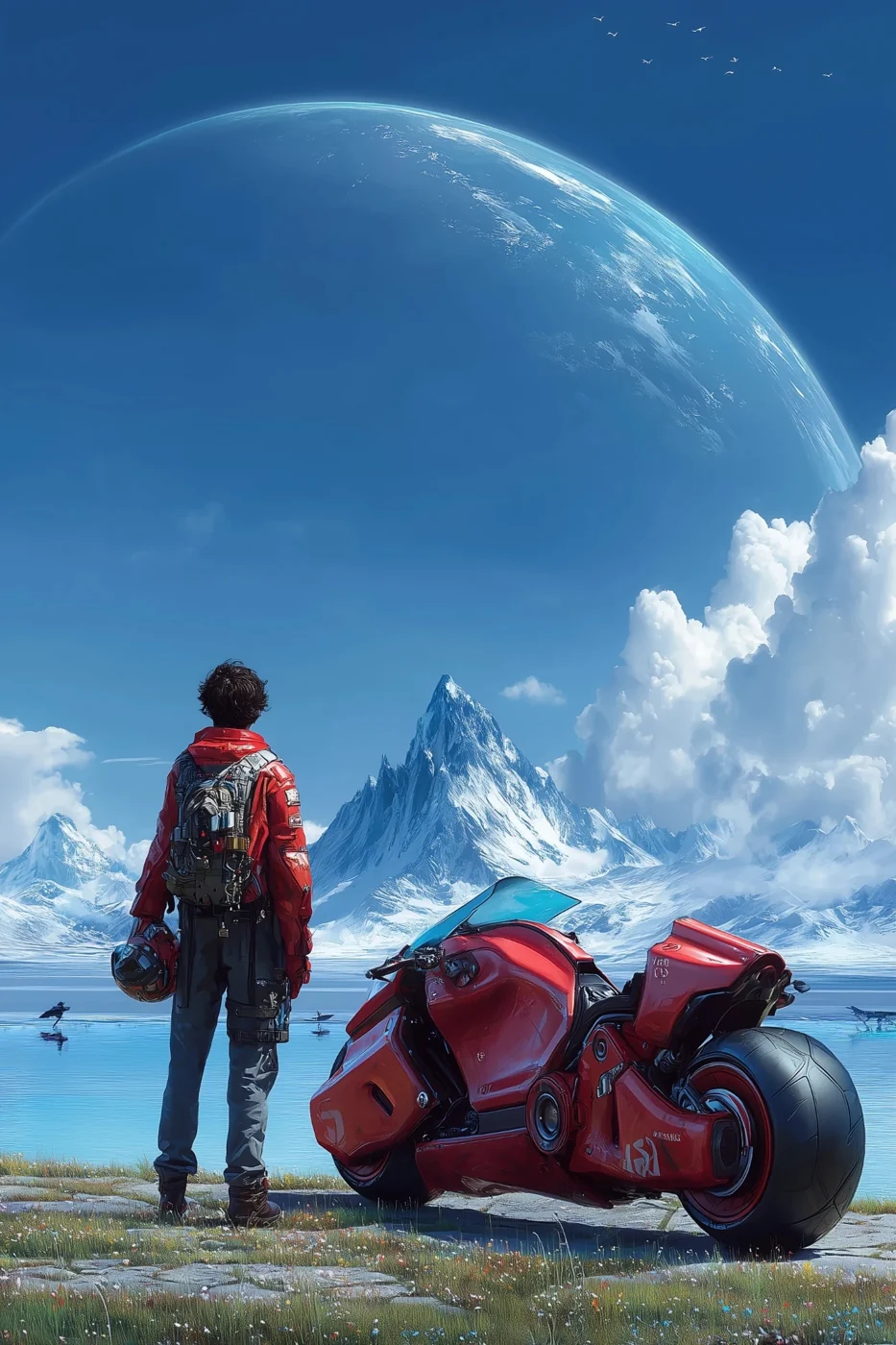
Rider and bike
Midjourney community
Prompts to copy
These templates apply the research below. The wording is mine, not from a paper, so change it until it works for you.
Images
Image template
Fill in the brackets. Aim for 20 to 40 words.
[Medium and style].
[Main subject, with its age, clothes and materials right next to it].
[Second subject and exact position: left or right, on which surface].
[Setting: place, time of day, weather, background].
[Light: key light direction, colour, shadows].
[Framing: shot size, camera angle, lens, aspect ratio].
What each colour means
Medium
What kind of image this isGoogle's guide has style in its formula
Subject
Who or what, with its details right beside itStruPO, ASQL: keep details with their object
Position
Where things sit in the frameT2I-CompBench++: models mix up positions. Exact layouts may still need an edit
Setting
Where it happensGoogle's formula: location and context
Light
Where the light comes from and its colourGoogle's guide: name the lighting
Framing
How close, what angle, which lensGoogle's guide: composition and camera
Is this backed by research? Each part is, but no paper tested this exact order. The order is my own checklist, so change it if something else works for you.
Filled-in example
A longer version from my research notes. It runs over 40 words, so try trimming it.
Editorial 35mm cinematic film still. A weathered 45-year-old detective in a damp olive-drab trench coat, walking along a wet asphalt street slightly left of frame, adjacent to a retro-futuristic black sedan on the right curb. Dense dystopian city alleyway at night with dark brick facades. Backlit by a pale blue overhead streetlamp with rim light on the coat, contrasted with warm magenta neon reflections in street puddles. Wide-angle full-body shot, low-angle perspective, 28mm lens at f/2.8, atmospheric mist, 16:9 aspect ratio.
Interview prompt
Paste into Claude, ChatGPT or Gemini.
You're a film director and prompt writer. I want an image of [your idea], made in [model].
Ask me up to 5 questions about the subject, setting, light and framing. Wait for my answers.
Then write one prompt, 40 words or fewer, in this order: medium, subject, position, setting, light, framing. Keep each object's details next to its noun. Describe only what should appear.
Art director prompt
Upload your image and paste your brief in the same chat.
Compare this image with my brief. Tell me the one slot to change, and rewrite only that slot.
Edit template
Change one thing per turn. Mask the area too if you can.
Change only: [one named thing].
Keep: identity (face, features, skin tone, body shape, pose), geometry, layout, lighting, camera angle, surrounding objects.
Constraints: no added accessories, text, logos or watermarks. Do not change anything else.
Reference prompt
Attach your images first, and say what each one is for.
Using the attached [image 1] as the [character, structure or style] and the attached [image 2] as the [location, texture or colour], create [new scene].
Video
Video template
Upload your locked frame first, then paste this.
Use my image as the first frame.
Camera: [one move, such as a slow push in].
Subject: [a verb you can see, with a direction].
Scene: [what changes over time].
Continuity: [what stays the same: faces, clothes, light].
Format: one shot, [8] seconds, 16:9.
Timed multi-shot template
For Seedance 2.5 and similar models. Give every shot its own start and end time.
[Duration], 16:9. [One sentence on what happens.]
REFERENCES: @name: [what to take from it, and what to ignore].
0 to 4s: [camera position, lens, move]. [Who is where]. BACKGROUND: [what's behind them]. [Action].
4 to 8s: [camera position, lens, move]. [Who is where]. BACKGROUND: [what's behind them]. [Action].
SOUND: [ambience, and any lines, each spoken once].
KEEP CONSISTENT: [faces, clothes, seats, what must not change].
Scenes
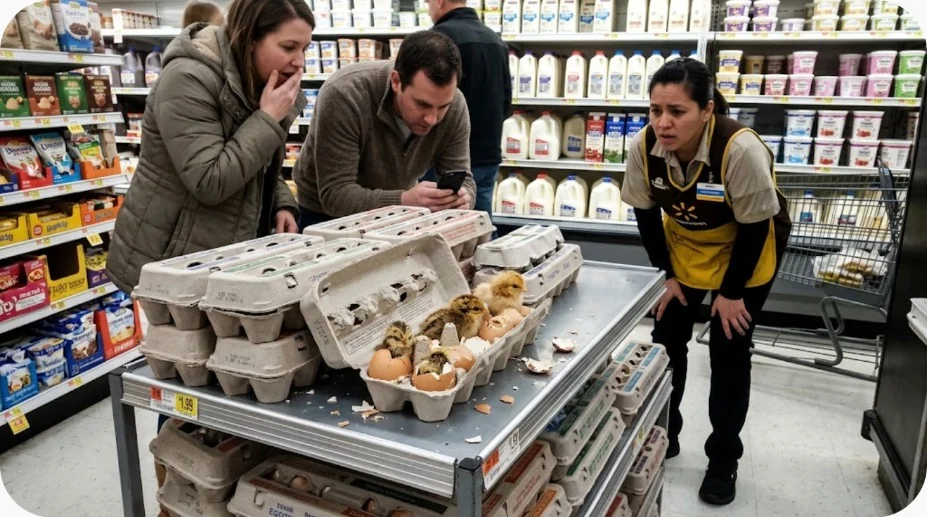
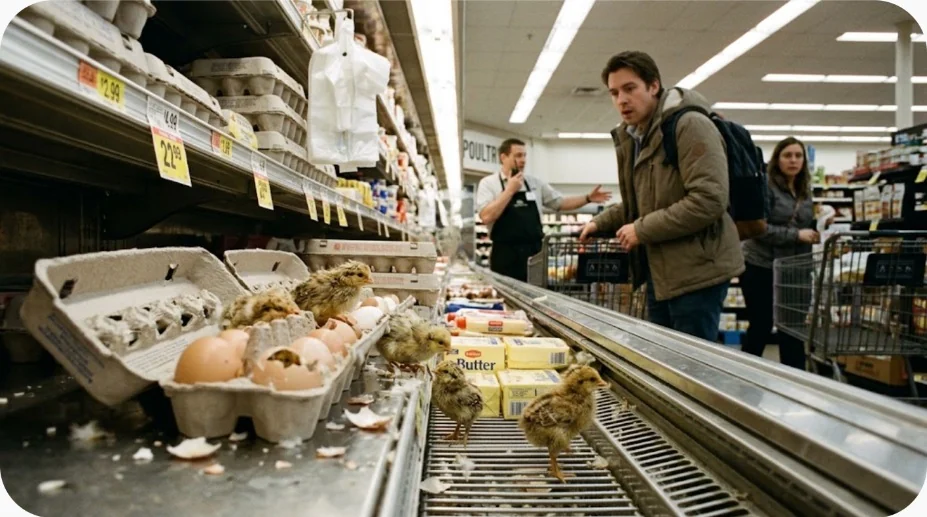
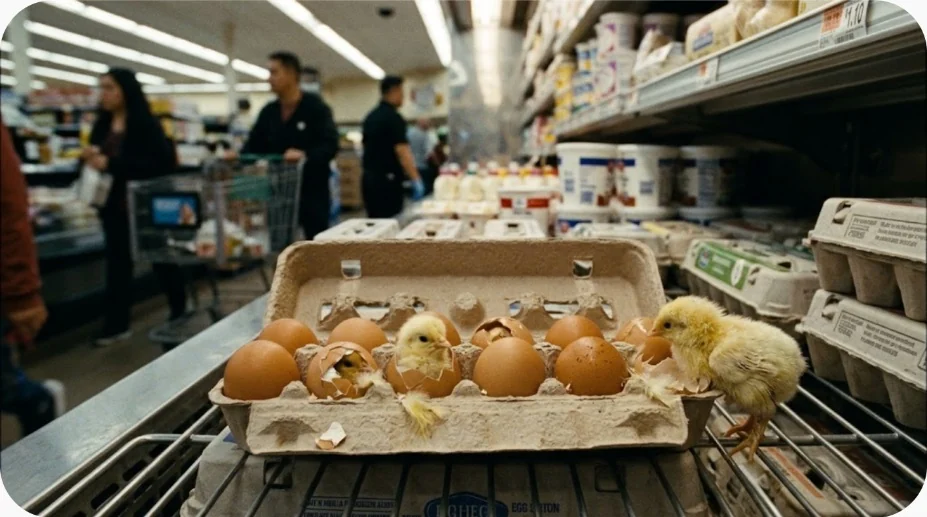
Supermarket: first frame
Make it yours: change the details.
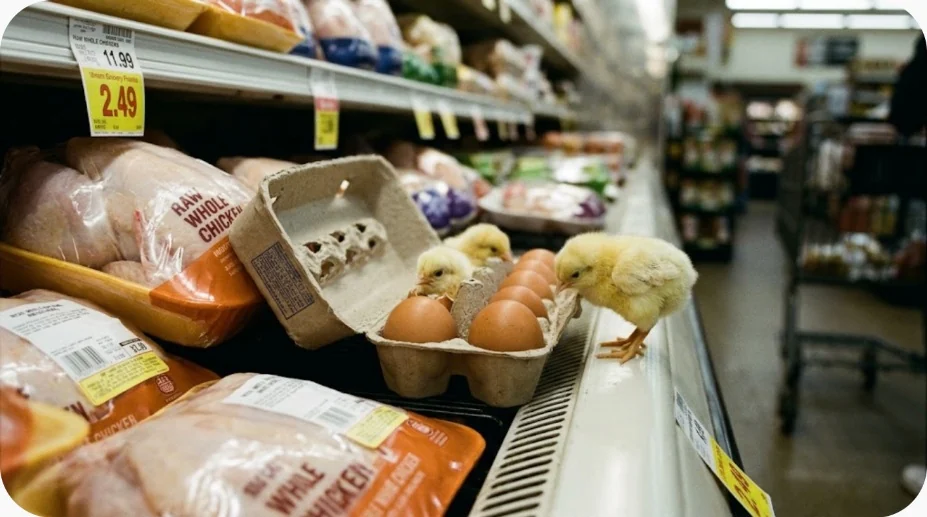
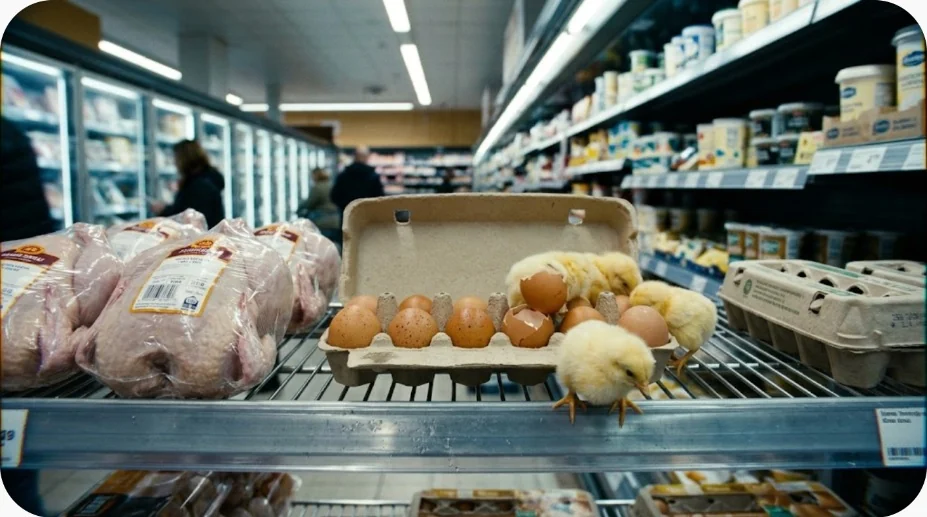
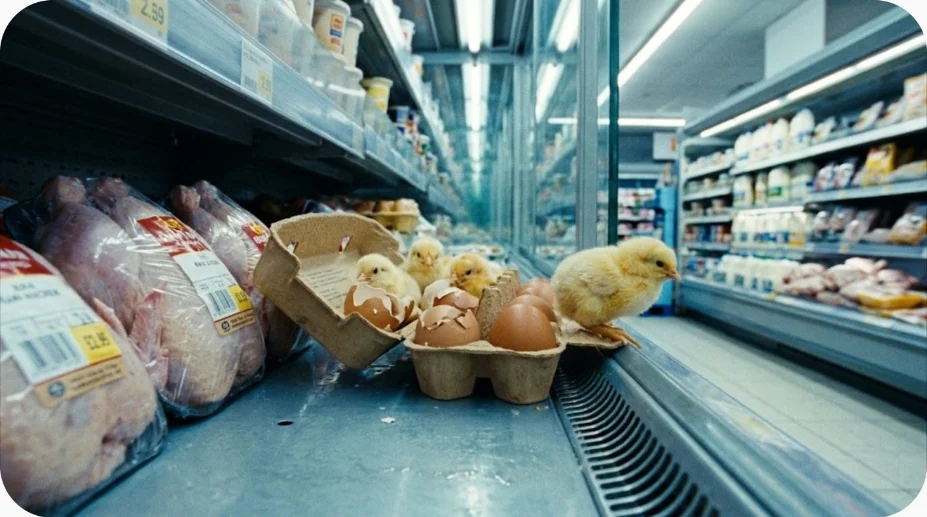
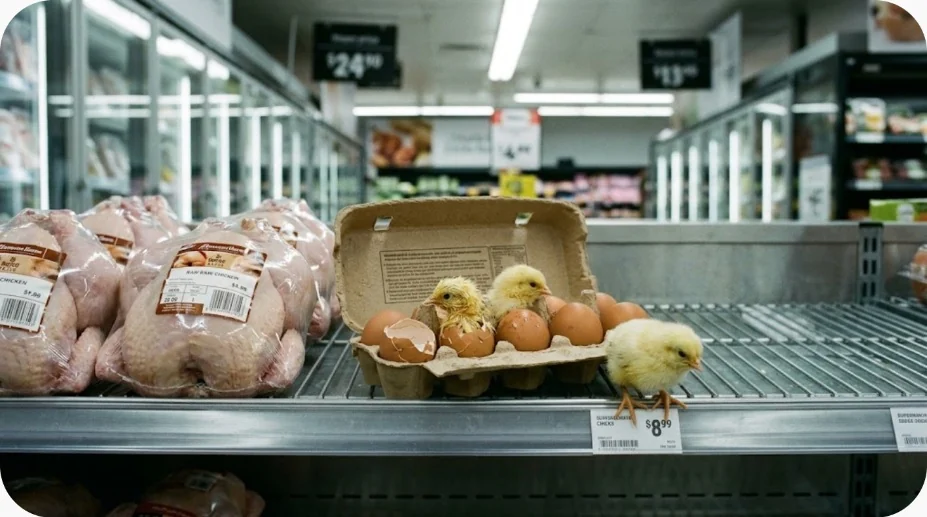
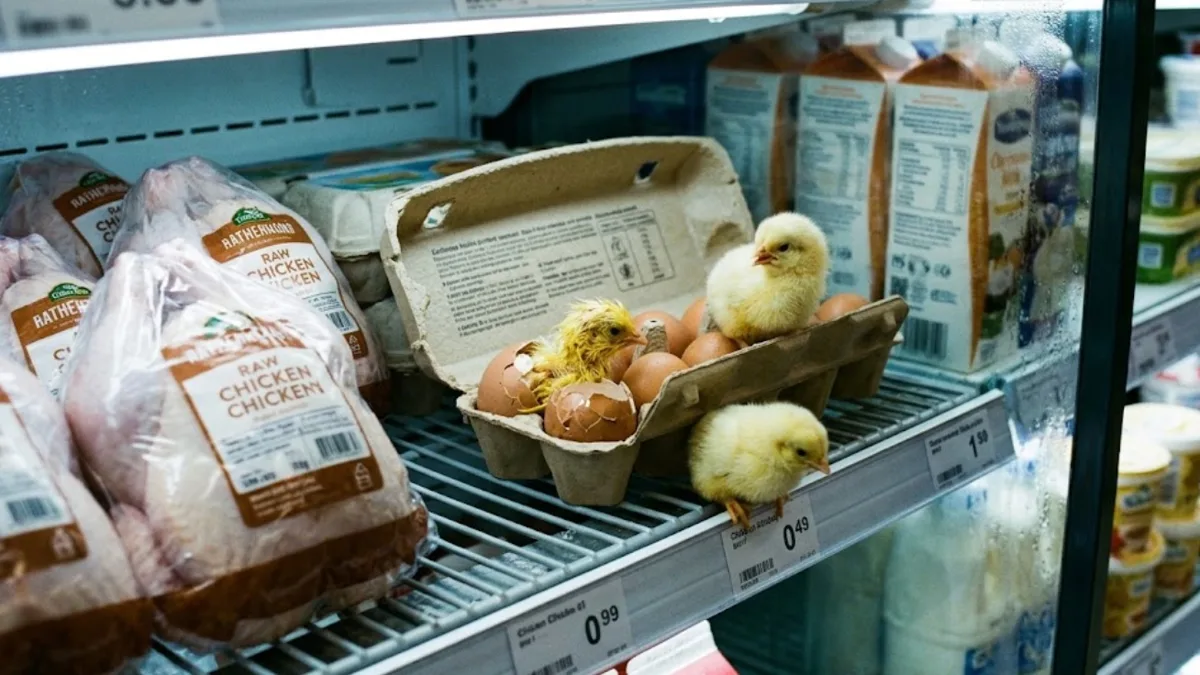
35mm film still. An open carton of brown eggs on a supermarket chiller shelf, one egg cracked, beside plastic-wrapped chickens. Cold overhead light. Close-up, eye-level, 50mm, 16:9.
Supermarket: motion
Use after you've locked the first frame.
Slow push in on the carton. The cracked egg rocks and a yellow chick climbs out. Wrapped chickens burst their plastic and flap across the aisle. Same shelf, same cold light.
Jerusalem market: first frame
Make it yours: change the details.
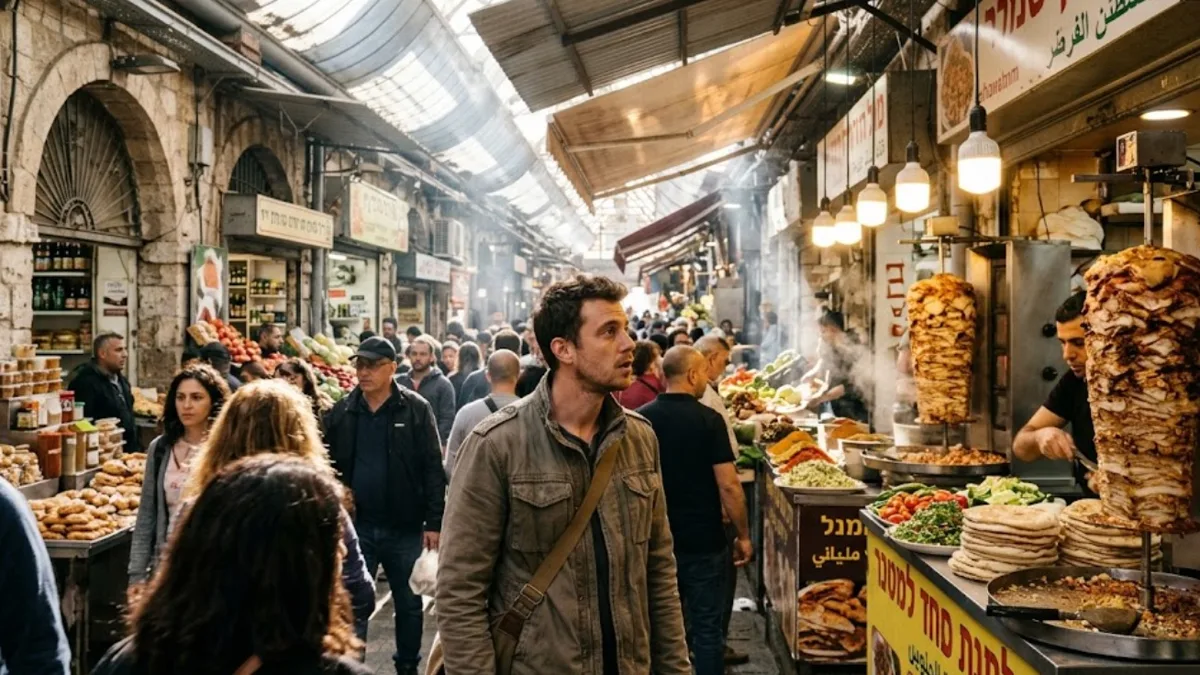
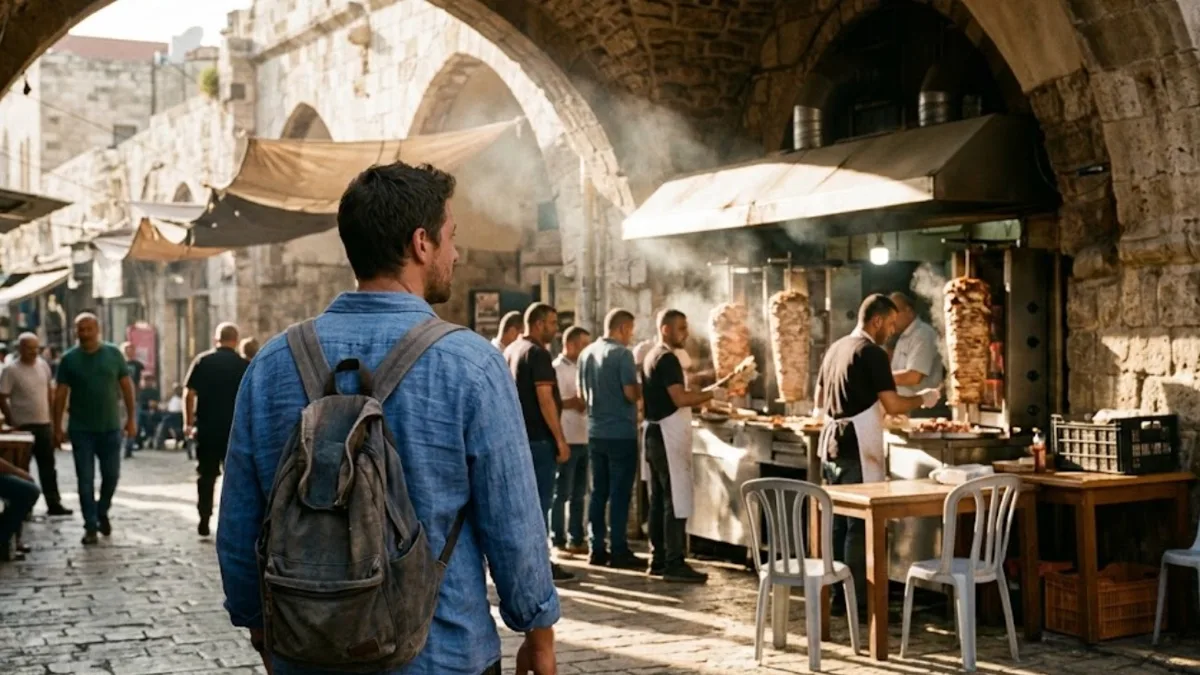
35mm documentary still. A hungry traveller in a blue linen shirt, seen from behind, walks towards a shawarma stall. Stone arches above. Warm afternoon sun. Eye-level, 35mm, 16:9.
Jerusalem market: motion
Use after you've locked the first frame.
Handheld tracking shot behind the traveller. They weave between shoppers and stop at the stall. The vendor slices shawarma and hands over a wrap. Same blue shirt, same arches.
Writing prompts with an AI
Turn a guide into a prompt
Paste this into ChatGPT or Claude, with the guide for your model.
Here's the prompting guide for [model]: [paste the link or the text].
Write me a prompt for [your idea].
Ask me questions first if you need to.
Reference sheets
Character sheet
Make this first, then attach it whenever that character appears.
Create a 16:9 image: Character reference sheet on a plain grey background. [Who they are: age, hair, clothes, one standout detail]. Full body from the front, side and back, plus close-ups of their face and [the standout detail]. Same person and same outfit in every view.
Location sheet
Nine views of one place, so every shot feels like the same place.
Create a 16:9 image: Location reference sheet, a 3 by 3 grid of views of the same place. [The place: what it is, materials, colours]. Wide, medium and close views from different angles. Same place and same light in every view.
Use your sheet
Attach your sheet, then paste this.
Using the attached sheet as the character, create: [Medium]. This exact person, in the same clothes, [what they do], [where]. [Light]. [Framing].
Before and after
Real results from Gemini: the first image from each prompt, in a new chat, with nothing re-rolled. A structured prompt doesn't always give you a prettier picture. It gives you the picture you asked for, and shows you what to change next.
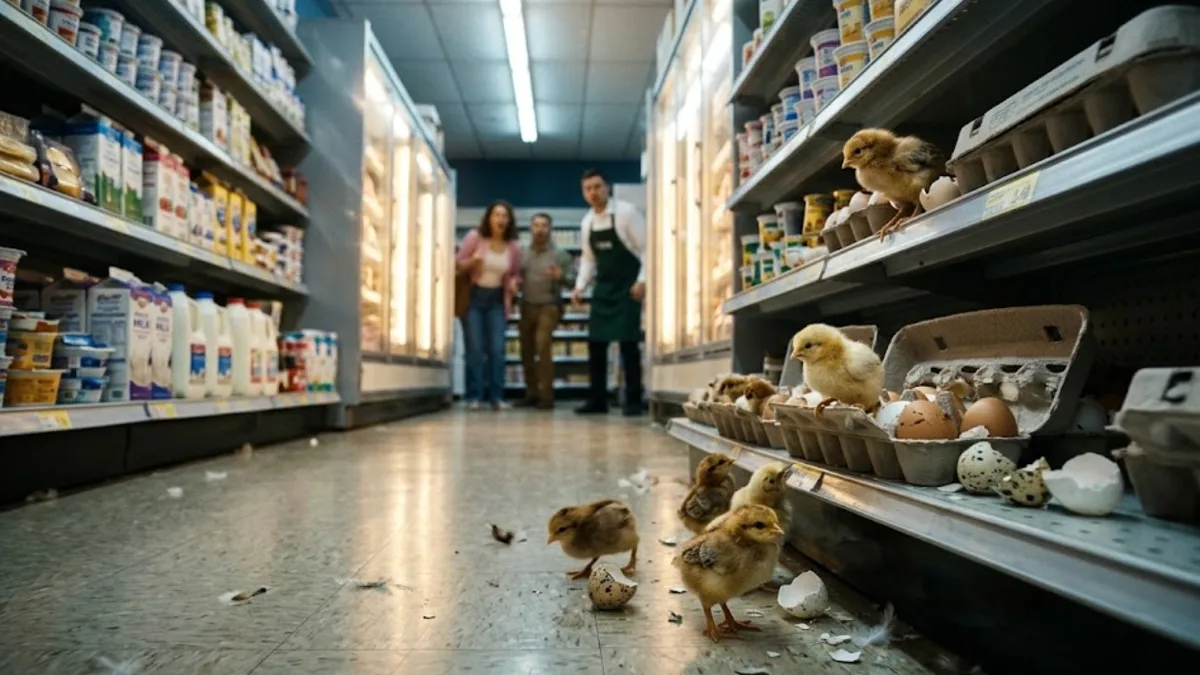
The supermarket
Before. A cool cinematic supermarket where the eggs hatch and the chickens come alive, hyperrealistic, ultra-detailed, 8k masterpiece, trending on ArtStation.After. 35mm film still. Yellow chicks hatching from a carton of brown eggs on a supermarket chiller shelf, one chick on the shelf edge, beside plastic-wrapped chickens on the left. Cold overhead light. Close-up, eye-level, 50mm, 16:9.
The loose one is fun, but the model chose the angle, the people and the whole scene. The second one is the shot I asked for.
The market
Before. A stunning cinematic masterpiece of a hungry person walking through a market in Jerusalem trying to buy a shawarma, hyperrealistic, ultra-detailed, 8k.After. 35mm documentary still. A hungry traveller in a blue linen shirt, seen from behind, walks towards a shawarma stall. Stone arches above. Warm afternoon sun. Eye-level, 35mm, 16:9.
I got the blue shirt, the view from behind and the warm sun. It also added a backpack I never asked for, and my prompt forgot to name Jerusalem, so that's what I'd change next.
What the research says, in plain English
Much of this tested earlier models, so try it on yours.
Keep details next to the thing they describeStruPO, ASQL Conditioner
Aim for about 20 to 40 wordsStruPO
Words like 8k won't fix the layoutT2I-CompBench++
Need exact counts or positions? Edit it afterwardsT2I-CompBench++, ASQL Conditioner
Keep what works and change one thingAPPO
Something missing? Try again before adding moreZhang et al. 2024
Describe what you want to seeGoogle's Nano Banana guide
The elephant and the glasses
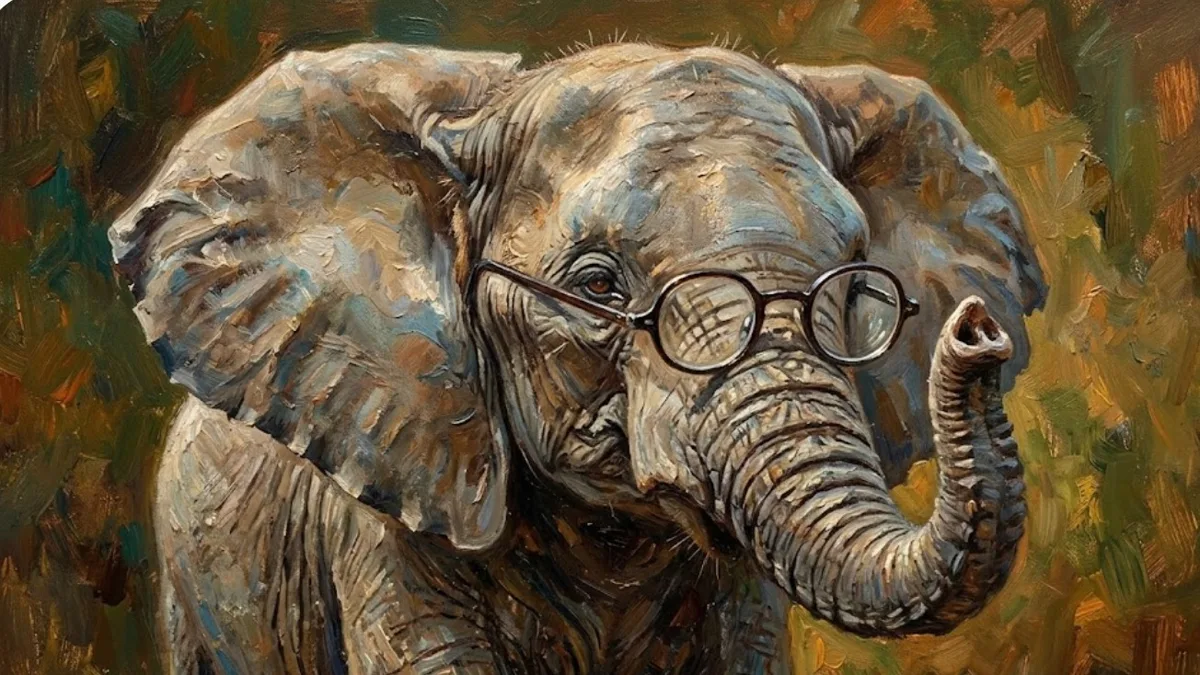
Zhang et al. ran "A painting of an elephant with glasses" twice, each from different random noise. In the image that lost the glasses, attention favoured "elephant" by the middle of generation. In the one that kept them, the two words got roughly equal attention. The authors call the link a conjecture.
Both images used the same prompt, so word order doesn't explain the difference. If a detail goes missing, run it again before you rewrite the prompt.
This image is the same prompt in Gemini, on one try. The glasses are there, so this may be rarer on newer models.
Does 8k make a difference?
A bit for the look, not for the layout. In ImageReward, prompts with words like 8k and highly detailed were rated somewhat higher by people. That's a pattern across a group of words, not a test of 8k alone. T2I-CompBench++ found that padding out prompts didn't fix composition.
What about "no cake"?
Some newer models cope with it, so test yours. Google's guide still says to describe what you want ("empty street" instead of "no cars"), and Ban et al. found negative prompts can bring the object in if they act too early. So lead with what you want, and put any "no" last. That last part is my habit, not a finding.