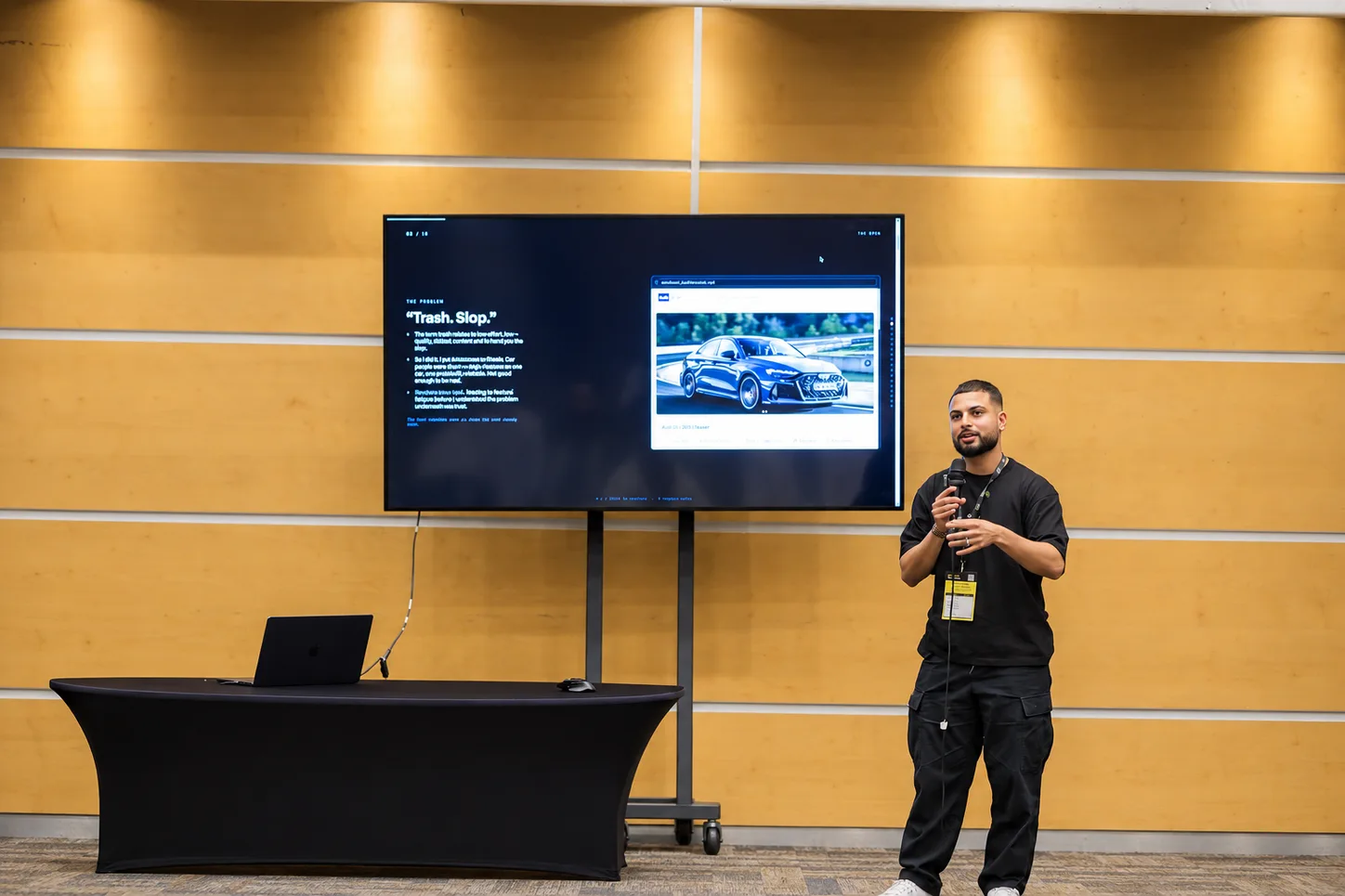
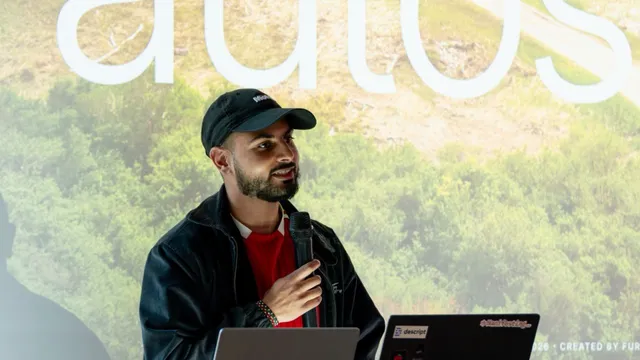
Keynote · Jun 2026 · Muslim Tech Fest, London
Intentional design and AI prototyping
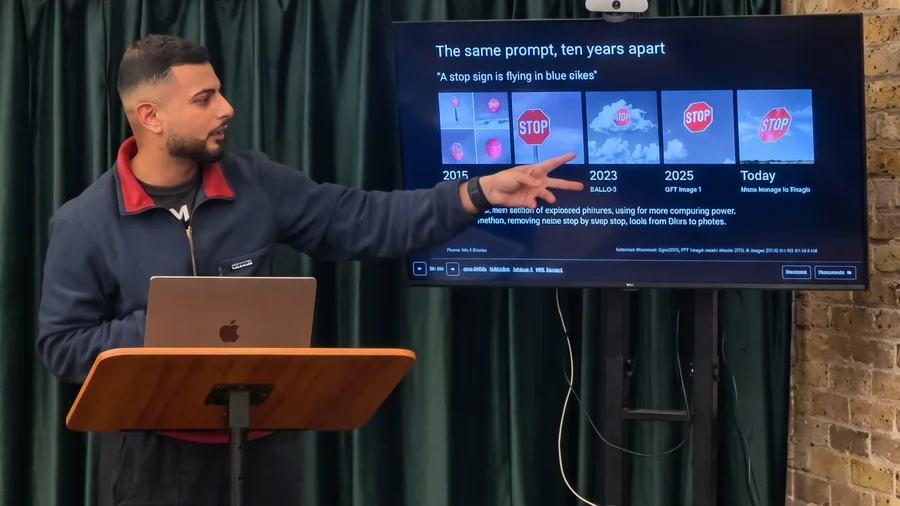
My keynote at Muslim Tech Fest's Replit Launchpad, a day of talks on building with AI. When generation is free, intention is the only thing left to optimise for. Here are the slides, the framework I now use before opening any AI tool, and the reading list.
A failure to start with
Last year I built a car website called AutoScout and posted it on Reddit. Car people were blunt. "Trash. Slop." Eight features on one site, none past 80% reliable.
Shipping it was fine. My mistake was moving on to the next feature before I understood the problem underneath. I'd been moving so fast with AI tools that I forgot to ask whether any of those features were worth building.
Pendo studied 615 software products and found 80% of features are rarely or never used: 12% get used often, 8% moderately, 56% rarely and 24% never. That was before AI made shipping so cheap, and AI has multiplied it.
The slot machine in your IDE
Anna Lembke at Stanford studies dopamine, and it peaks in anticipation, not consumption. The hit comes from walking to the freezer more than eating the ice cream. With AI, it comes from the next prompt more than the shipped product.
Good output is what keeps you hooked. If the output were bad, you'd stop. AI is good enough to keep you in the loop, but not good enough to make the big decisions for you. Add anchoring, confirmation bias and sunk cost, and your first idea gets harder to walk away from with every prompt.
Cal Newport calls the result pseudo-productivity: visible activity standing in for real work. A PR I thought about for three hours and one I generated in three minutes look the same from the outside. His answer is slow productivity: do fewer things, work at a natural pace and obsess over quality.
The design process is dead
Jenny Wen at Anthropic and Julie Zhuo, formerly head of design at Facebook, have both written about this. The old flow of idea, mocks, PRD, code, launch and then surprise stops working when capabilities change weekly.
The new way is a loop: prototype, test, learn, prune. Julie Zhuo and Henry Modisett at Perplexity name three gates for every prototype. Can today's tech do it? Will it consistently meet expectations? Is it fast enough for real use? If any answer is no, prune it and move on.
Karri Saarinen, co-founder of Linear, says craft is about being intentional. Intuition comes from years of experience. AI can produce the output, but it doesn't have those years telling you it's wrong when it looks right.
Living the problem: TrainTimesUK
My mum lives in Essex, where weekend trains run every 30 minutes, so you leave the house around the train times. I built TrainTimesUK for my own commute and hit every wrong platform and failed load myself, day after day.
In March it had 10 users and 26 fetch errors. By April 848 people had found it, and the cracks showed: 55 fetch errors and 64 rage clicks. May brought 1,349 unique visitors, a 59% jump, and by the last week of May it was down to 3 errors and 0 rage clicks.
Instead of four half-built features at 80%, I went deep on a few, and visitors climbed while errors fell.
The Intention Brief
Five questions, fifteen minutes, on paper, before I open any AI tool. Here they are with my answers for TrainTimesUK. Fifteen minutes of clarity saves fifteen hours of rework.
- ProblemWhat am I solving, in one sentence a stranger could understand?Show the next trains and the right platform for the stations I actually use.
- PersonWho exactly is it for? Name five real people, not adjectives.My mum in Essex, two weekend commuters, a colleague who travels for work, my flatmate.
- ScopeWhat does success look like at the smallest scope?One station, the next three departures, the correct platform, refreshed live.
- QualityWhat does 'good' look like?Loads in under a second and never shows the wrong platform.
- HumanWhat part can only a human decide?Which stations matter, and what 'reliable enough' feels like to an anxious commuter.
Copy the brief
Paste it into a note or a markdown file and answer it before you open any AI tool.
# Intention Brief: [project] ## 1. ProblemWhat am I solving? One sentence a stranger could understand.- [answer] ## 2. PersonWho exactly is it for? Name five real people, not adjectives.- [person 1]- [person 2]- [person 3]- [person 4]- [person 5] ## 3. ScopeWhat does success look like at the smallest scope?- [answer] ## 4. QualityWhat does "good" look like for this?- [answer] ## 5. HumanWhat part can only a human decide?- [answer]Four moves AI can't make for you
- DogfoodUse your own product daily and live every flaw. Watch the session replays. The reps compound into instinct.
- ResearchLook for real complaints on Reddit, X and LinkedIn, and go deeper with NotebookLM. Talk to real customers, not just friends. Friends will tell you it's great.
- CraftLearn the psychology that makes interfaces work, like Hick's Law and social proof. It's the difference between a product that feels right and one that feels off.
- PreviewShip in preview, like Anthropic does. Set expectations early and learn in public.
I closed with the story of Alī ibn al-Ḥusayn, who carried sacks of flour to the widows and the poor of Madinah at night, face covered, for years. Nobody knew until he died. The most valuable work is often the work nobody sees: the thinking before the prompt, and the fifteen minutes with a blank page.
Further reading
- Why is Quality So Rare? (Linear) by Karri SaarinenCraft is the moat
- The Death of Product Development by Julie ZhuoTaste and the process
- Don't Trust the Process (Anthropic) by Jenny WenPrototype first
- Slow Productivity by Cal NewportPseudo-productivity
- Dopamine Nation by Anna LembkeThe dopamine loop
- LLMs are slot machines by Cory DoctorowThe trap
- TrainTimesUKThe app from the talk, live
- The full deckOpen the slides on their own
- My LinkedIn postPhotos and thoughts from the day
More talks and workshops
Hopefully this helps you out! Feel free to reach out, or see all my talks and events.