Speaking Arabic was the hard part, so I built a voice tutor
A trip to Amman, a build night and a voice model, plus what I learnt about keeping it safe
 By Furquan Ahmad · October 22, 2026
Arabic is one of the hardest languages to learn, especially when it comes to actually speaking it. Reading and writing were starting to click for me, but every time I had to speak, I froze.
I've been building with AI for a while, and I kept coming back to voice models. They've got really good. You can hold a real conversation, in real time, and they'll switch between Arabic and English as you go.
So I built something for it. Sahara Studio lets you practise spoken Arabic through everyday moments. You pick one and talk it through out loud with a tutor who speaks like a real neighbour.
Sahara Studio in 45 seconds.
How it works
- Pick a moment: a market run, ordering a coffee, taking a taxi, a family catch-up
- Talk to your tutor in Levantine Arabic, live
- Stuck? Phrase cards show you what to say next, with the English underneath
- Finish and get a recap of what went well and how to sound more natural



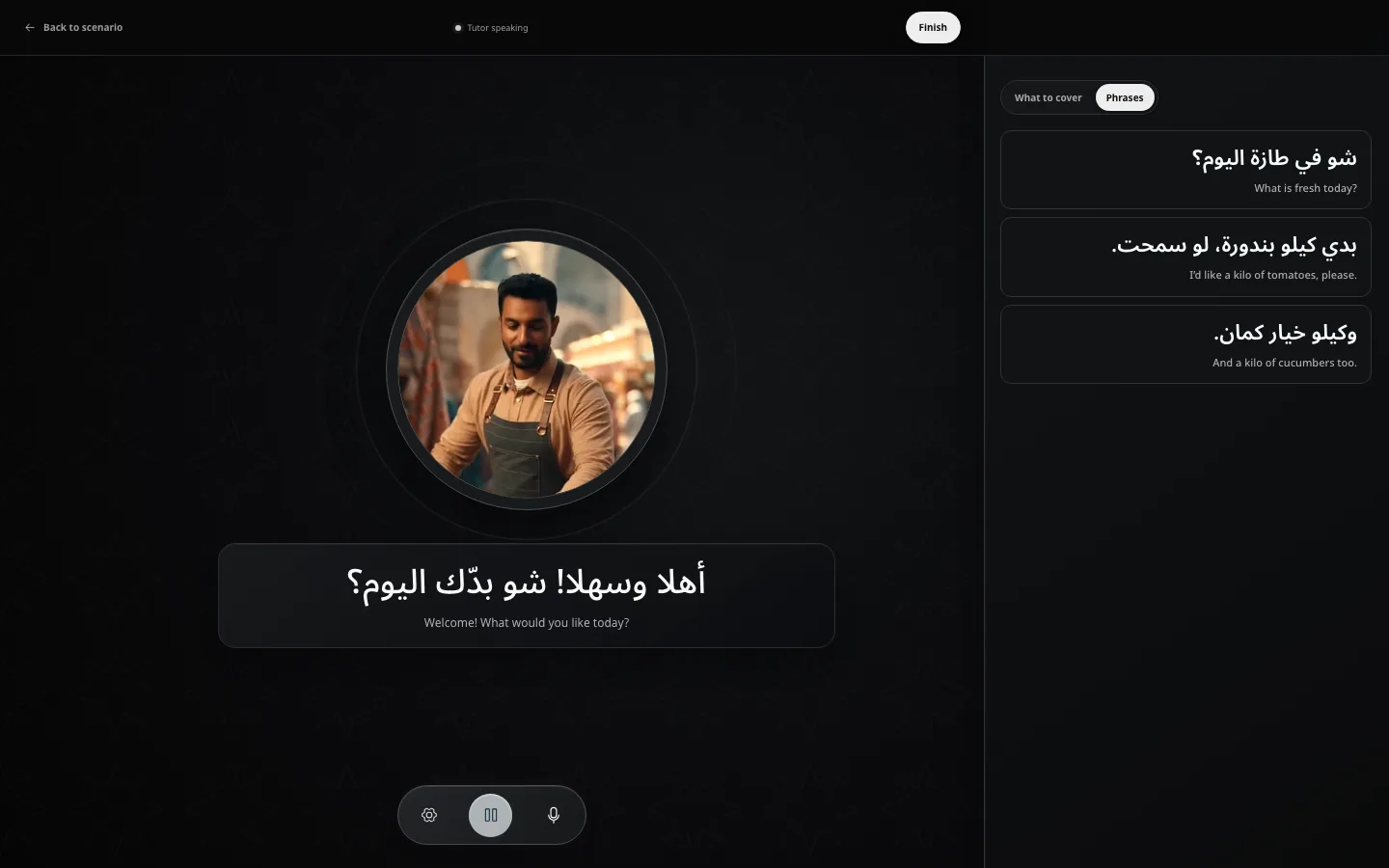
Sami asks what you'd like today. If you get stuck, the phrase cards on the right have your back.
Why it matters
It's been helping me a lot. Most of us freeze when it's time to actually speak. Practising the same everyday moments out loud, with no pressure of getting it wrong in front of someone, is what's made phrases finally stick for me 💜
How I designed it
The look came from a trip to Amman. I got so much inspiration from the mosques there, especially the tiling and the patterns, and from the tatreez (Palestinian cross-stitch embroidery) on the dresses in the shops. You'll see those patterns running through the background of Sahara.

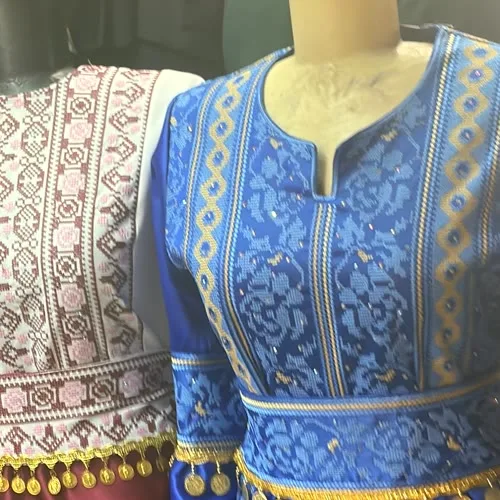
📍 Amman. Tatreez I spotted in the shops, and some of my inspiration.
I started building it at a Deen Developers build night. I didn't open Figma first. I had a picture in my head of how it should look and feel, and that's how I prompt.
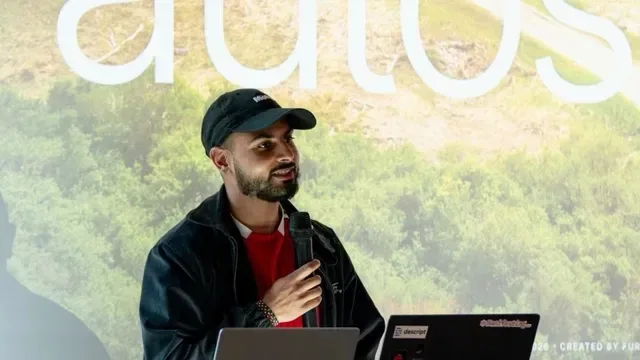
📍 Deen Developers, London. Showing what I've built with AI.
I find it much easier to start from a vision. AI builds what I've pictured, and I keep prompting until it matches ✨
What I learnt building it
🔑 Keep your keys out of your hosting
I host on Vercel, and at first every API key lived in its environment variables. For a small app that can be fine, as long as access is locked down and you rotate your keys. But I wanted tighter control, so I moved them to Google Cloud Secret Manager.
Now the app signs in as itself with a short-lived token from Vercel, and fetches only the keys it's allowed to read, when it needs them. There's no stored password for anyone to leak.
Anyone in the Vercel project can read every key.
The keys live in 1Password, and one script loads them in.
If you're running lots of services and need central access rules, audit logs or short-lived credentials everywhere, HashiCorp Vault is worth a look, and works the same way. Whatever you pick, keep the credential your host uses as narrow as possible. If it can read everything, you've just moved the problem somewhere else.
🛡️ Voice needs guardrails
With voice, you don't want people asking it malicious things, or the tutor saying something it shouldn't. Tools like Amazon Bedrock Guardrails are really good for this with text.
Live voice is trickier, because the audio goes straight between your browser and Gemini. Sahara watches the tutor's live transcript instead, and cuts it off if it crosses a line, like giving medicine doses in the pharmacy scene.
It only catches real advice, like a dose or a PIN. The tutor's own refusals get through.
🤖 Give agents only what they need
I've learnt not to give AI agents more permissions than they need. I now check what each agent can run, which services it can reach, and whether it needs my approval before acting.
I tend to connect MCPs for convenience, but every connection widens the attack surface. Malicious content from one tool can land in an agent's context and affect the other tools it's connected to. Now I only switch on the MCPs a task actually needs, and I review the ones that stay connected.
The role of a designer has changed
These days I ship PRs myself and get engineers to review them. Not long ago, an idea like Sahara would have stayed a Figma prototype.
I've been building out my own ideas and validating them with real people, and it's been great. AI gets you to 80-90% fast. Most of the work is in using it day to day and fine-tuning it, and that's where design craft shows.
My advice is to get shipping. Pick a problem you have yourself, build the smallest version and use it. You'll learn more from that than from reading another thread about AI.
What's next?
Going forward, I'd love to build a model fine-tuned for specific Arabic dialects 🚀 That's a project of its own, and the same lesson applies. The training data and the model both need proper access controls.
If you're learning Arabic, or know someone who is, try Sahara Studio free. Sign in with Google or your email and start your first conversation in seconds.
And if you're a designer who's started shipping, I'd love to hear what you're building. Feel free to reach out! 💜